
AASC Newsletter – April 2026

Vol. 2026, Issue 4
April 24, 2026

Travel Awards Available for 2026 AASC Annual Meeting

AASC has allocated up to $10,000 in travel support to assist students and other participants presenting at the AASC Annual Meeting in Fairbanks, Alaska this year.  Individual awards will not exceed $2,000 per person, though actual amounts may vary depending on need and available funds.  The application deadline is May 1st, 2026.

Applicants must submit an abstract for either an oral or poster presentation. Abstracts are due by April 30, 2026, and can be submitted via this form at: https://forms.gle/MHF983jjHBsxytB18.

Travel awards will be distributed based on need, with priority given to students and early-career participants.  Applicants will be asked to indicate requested support for airfare, lodging, registration, and other travel related expenses.

To apply, please visit https://forms.gle/9RMjE4ehPtVjPT7t5.  For any questions about the travel award opportunity, please contact Jeff Andresen at andresen@msu.edu.

It's Time to Renew Your AASC Membership

Dear AASC Members,


We are just under two months away from the AASC Annual Meeting in Fairbanks, and it’s time to pay your annual membership dues.

Paying your membership dues gives you access to the AASC listserv and forum.  All members have voting rights on all matters before the AASC, except for changes to the Constitution and By-laws, which are voted on Charter Organizations (i.e., State Climate Offices and Regional Climate Centers).  Your support also makes it possible for AASC to advocate for climate services and observing programs.

If any offices would like to support the AASC through an Associate ($2,500) or Institutional ($5,000) membership, please contact Melissa Griffin (GriffinM@dnr.sc.gov) so she can generate the invoices and complete any forms required by your agency or university’s accounts payable department. Upon payment, you will receive the in-person and virtual registration discount codes for the annual meeting.


If you are an SC or RCC director, please pay your dues ($100) via: https://stateclimate.org/product/membership-dues-charter-organization/

Associate memberships should use this link to pay dues ($40): https://stateclimate.org/product/membership-dues-member/

Students should pay their dues ($20) via: https://stateclimate.org/product/membership-dues-student/

Please pay your membership dues by Monday, June 1, 2026, to ensure you can vote at the business portion of the AASC Annual Meeting in Fairbanks.

Thank you!

2026 Annual Meeting


Call for Abstracts Deadline Extended

The deadline to submit an abstract for this year’s AASC Annual Meeting has been extended to April 30th. To submit an abstract and present at this year’s Annual Meeting, go to https://forms.gle/ZQCrNvFUJ7wkCGRy8.


Lodging
A room block is available at the La Quinta Inn & Suites by Wyndham Fairbanks Airport (4920 Dale Rd., Fairbanks, AK, 99709) in Fairbanks.  Guests may also contact the hotel directly at 907-328-6300 and indicate they are with “AASC 2026″ to receive the group rate.  Rooms are available at the GSA rate of $254/night (plus tax) from June 21-28.  The deadline to book a room in the room block is May 21st, so be sure to reserve your room soon!

Registration
An announcement about registration will be coming soon.  Please keep an eye out for that!

Need more information?  Visit the meeting website here.  For questions, contact Martin Stuefer at mstuefer@alaska.edu.
2026 AASC New Scientist Award Announcement


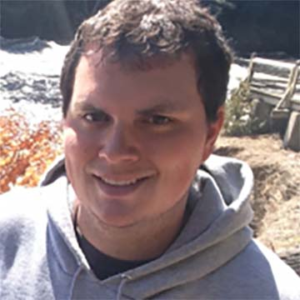
The AASC Awards Committee has the pleasure of announcing that Derek Thompson’s paper “A Climatology of Gridded Wet-Bulb Globe Temperature for the Southeastern United States” has been selected as the winner of the 2026 AASC New Scientist Award in Applied Climatology. 

Thompson is a Research Associate for the Southern Climate Impacts Planning Program (SCIPP) at Louisiana State University.  As the winner of this award, Derek will receive a plaque and a cash award of $1000. The award also includes paid attendance at the Annual Meeting of the AASC in Fairbanks, Alaska, that includes out-of-pocket travel expenses up to $2000 and waiving of the conference registration fee. He has been invited to deliver a presentation of his research at the Annual Meeting.

AASC Member Spotlight

This month’s member spotlight is someone we probably think we’re familiar with.  We’ve seen her at many, many AASC meetings and other climatology-related events.  But we bet you don’t know everything about Pam Knox.   
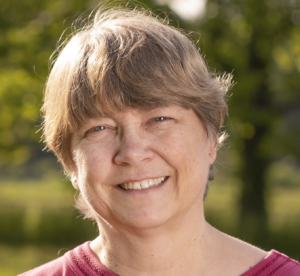
Name: Pam Knox

Hometown: Grand Rapids, MI

Title:  Director of the University of Georgia Weather Network and Extension Climatologist

Affiliation: University of Georgia (UGA) Extension

Current Residence: Athens, GA

Time in Current Position: 8 years (25 years at UGA)

Previous Jobs/Career:  I started my career as a meteorologist in 1984 in the National Weather Service Office of Hydrology in Silver Spring, MD, studying extreme rain events in the Pacific Northwest. After a break to work on a PhD at the University of Wisconsin-Madison (never finished), I became the Wisconsin State Climatologist from 1989 to 1996. During that time, I married John Knox, another UW atmospheric sciences graduate student. From 1996-1998 I was on maternity leave in New York City while John did a post-doc, but I did an internship on National Public Radio’s Science Friday while I was there. From 1998 to 2000 I worked as a physics lab instructor at Valparaiso University while John had a tenure-track meteorology position. In January 2001 we moved to Athens GA so I could take the job of Assistant State Climatologist for Georgia. In 2011, the SC and I were fired by the governor by executive order due to a prediction of drought for the coming year after a La Nina winter. After that I worked as a grant-funded scientist at UGA studying climate change impacts on Southeastern crops and national livestock production. I took the job of Director of the UGA Weather Network in 2018 to replace the retiring director, Ian Flitcroft, and have been working there ever since. John is now a full professor in geography and atmospheric sciences at the University of Georgia and has come to many AASC meetings. I am planning to retire from UGA this coming summer but will be at the Fairbanks meeting.

Research Interests:  I have no research requirements for my job so can flit around to look at whatever interests me in the moment.

Education:  BA in Physics and Mathematics (double major) from Calvin College (now University) in Grand Rapids, MI; MS in Meteorology from the University of Wisconsin-Madison under the direction of Dr. Vern Suomi; ABD from UW-Madison studying ocean circulation 18,000 years ago under the direction of Dr. John Kutzbach. Also two hydrology classes from the University of Maryland.

Family/Pets: My husband, Dr. John Knox, atmospheric sciences professor at UGA; our son Evan, a biostatistician at Duke University (currently unemployed due to DOGE); household cat Josie.

Hobbies:  Cloud and weather watcher but I don’t chase storms (I let them come to me), church music and committee activities, sewing like quilting and embroidery, reading spy-thrillers.

Sports Teams I Root For:   I usually root for the underdog, whoever it is. I was a Detroit Tigers fan growing up.

Fun Fact(s) About Me:  I am an ISTJ on the Myers Briggs personality scale. I do mystery shopping in my spare time and am a Certified Consulting Meteorologist who does occasional expert testimony. I rebelled against my parents in college by changing toothpaste from Crest to Colgate. I tell John “It’s not the magnitude, it’s the direction.” Now I just buy whatever is on sale, which is (ironically) just what my parents would probably do now if they were still alive.

My Most Memorable Weather Event:   I got started in meteorology when a tornado came two blocks from my home on April 21, 1967, when I was in the third grade in Grand Rapids. It was after dark so we could not see it, but the damage it caused made a big impression on me. I also saw the ground flashes from the Atlanta tornado of March 14, 2008 (another night storm), where we were staying in the Four Seasons in Midtown Atlanta after I won a weekend vacation there.
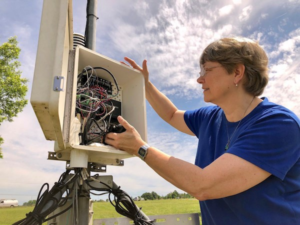
What AASC Means to Me:  My first AASC meeting was in New Jersey in 1990. I was struck by how helpful and welcoming in the group was. There were only three women in the group at the time. Since then, it has been my favorite peer group to interact with and has been a community for me to belong to. They have been very welcoming to John too. I have served as the Secretary-Treasurer from 1992-1994 and the President in 1996 and hosted the annual meeting in Madison WI in 1994. Our honeymoon trip in 1991 was to the Anchorage AASC meeting. Even after I ended my work as the Wisconsin SC, I continued to keep my membership and attended AASC meetings on a semi-regular basis as well as kept in touch with many of the friends I met at AASC. It has been a group that I always felt understood the importance of good records and service to the community and is always willing to share information and provide help when needed.

ARSCO Annual Report Deadline Approaching

If you are an ARSCO state, the deadline for submitting your annual report is quickly approaching.  Be sure to submit your report to Pam Knox, Chair of the AASC’s ARSCO Committee, by April 30th.  You can email Pam at pmknox@yahoo.com.  Non-ARSCO states are welcome to submit annual reports as well, but are not required.

Member News

  • (Georgia) Director of the UGA Weather Network, Pam Knox, has announced her retirement as of June 1. They have received approval to hire a replacement and details will be forthcoming.

  • (Kentucky) The Kentucky Mesonet has released a new update to its website, the most significant upgrade in nearly a decade.

  • (Midwest) The Midwestern Regional Climate Center (MRCC) has released a new and improved mapping interface within cli-MATE—MRCC’s self-service data portal. Options include gridded specific period maps, gridded long-term average maps, and interpolated station data maps.

  • (Wisconsin) Wisconet published its introductory journal article in the Royal Meteorological Society journal “Meteorological Applications”.

  • (Washington) The Pacific Northwest Water Year 2025 Impacts Assessment, funded by NOAA NIDIS and the sixth annual assessment, has been released. This assessment links weather and seasonal climate conditions for the 2025 water year to sector-specific impacts. This is a collaboration between the WA and OR State Climate Office’s and other regional partners.

  • (Rhode Island) Between February 22 and 23, 2026, 37.9″ of snow was observed at Rhode Island T.F. Green International Airport (Warwick), which set a new state record for 24-hour snowfall. This broke the previous state record of 30″, which was observed in Woonsocket during the Blizzard of 1978. The observation was verified and approved by the State Climate Extremes Committee (SCEC).

  • (Hawaii) In March 2026, Hawaii experienced a very wet month with two back-to-back Kona-low storms, with a vast majority of raingauges recorded amounts between 300 to 800% of their March averages. The damage of the storms was estimated at over $1 billion and the President of the U.S. had recently approved a Major Disaster Declaration to provide funding to help Hawaii and its residents.

Have a story you’d like to share about your organization?  Please submit your idea to us here.

Trivia!

Who doesn’t enjoy weather and climate trivia?  Certainly not the AASC!  Lets see if you can solve this month’s trivia questions from the AASC Newsletter’s Trivia Master, Matt Sittel:

  1.  Name two of the five states that completed a rare double play: they recorded their warmest February and warmest March on record this year (based on the early April release of NCEI’s monthly normals data).
  2. Fairbanks, Alaska, host city for our AASC annual meeting this June, rose above freezing for the first time this year on April 2. How many consecutive days was Fairbanks at or below freezing, and was this the longest such stretch on record?
    a. 137 days; yes
    b. 146 days; no
    c. 152 days; no
    d. 158 days; yes
  3. As of April 16, which US state has reported the most tornadoes in 2026, based on preliminary data from the Storm Prediction Center? This state’s count of 61 so far is 18 ahead of the second-place state, and its count is only one less than its yearly average of 62 (based on SPC data for 1995-2024).
    a. Alabama
    b. Illinois
    c. Iowa
    d. Mississippi
  4. On March 10, 2026, Illinois set a new record for the largest hailstone. It was found in Kankakee. How large in diameter was it?
    a. 5.0”
    b. 5.5”
    c. 6.0”
    d. 6.5”
  5. TRUE OR FALSE: All eight ThreadEx sites in Arizona set new record highs for the month of March this year.

See answers to this month’s trivia questions at the bottom of the newsletter!

Photo of the Month

We know the AASC community has some great photographers, or at least some opportunistic ones.  Please send us your photos of interesting weather and climate related events or scenes so that we can include them in future newsletters.  Go to the following Google directory to upload your photo.

Thanks!

– AASC Communications Committee

Contact the AASC

Have a suggestion for the newsletter?  Then contact the AASC Communications Committee at communications@stateclimate.org.  

For general inquiries about the AASC, contact the AASC Secretary at secretary@stateclimate.org.

Visit the AASC on the web at https://stateclimate.org!

Trivia Question Answers: 1) AZ, CO, WY, NM, and OK | 2) c. 152 days is Fairbanks’ second-longest stretch at or below freezing on record; their all-time record is 158 days in 1971-72. | 3)  b. Illinois | 4)  c. The hailstone was 6.0” in diameter and weighed over 1 pound! | 5) TRUE. New records include 109° in Yuma, 105° at Phoenix, 102° at Tucson and 84° at Flagstaff.

Leave a Comment

Your email address will not be published. Required fields are marked *