Vol. 2026, Issue 2
February 20, 2026
Send us your photos!
We hope you’re enjoying the AASC Newsletter. Over time, we hope to add different content, so keep reading each month to see what’s new! This newsletter is really the members’ newsletter because it depends on the members for news and content. One section we’d really like to make fun and interesting is the “Photo of the Month”. While our newsletter committee can scrounge around for photos they’ve taken, we’re sure many AASC members are great photographers and have snapped an amazing photo or two. So please send them our way. You can upload them here OR email them to us at communications@stateclimate.org!
President's Corner

Dear AASC Members,
Many of our programs rely on external contracts and grants for financial support and a major objective of the Association is the identification of potential collective and individual funding opportunities as they become available. One non-traditional opportunity I would like to bring to your attention is the Congressionally Directed Spending (CDS) request program in which funding is requested for a specific project in a specific location that benefits communities. The program works through Senate and House representatives in each state and congressional district. Requests typically support targeted investments in public infrastructure, public safety, health, education, and economic development, helping local governments and nonprofits meet community needs that might not otherwise receive funding through traditional federal grant programs. Many of our SC programs and projects fit under this requirement. While the awards for this program are typically individual one-year awards, they are financially significant (e.g. $300-400K) and relatively flexible in terms of what can be supported. Two of our SC programs were awarded funding during the current FY2026 program in proposals submitted through AASC. If your program is seeking support for a one-year project that might fit under this program, please get in touch with me or any member of the executive committee. The CDS program provides a valuable source of potential funding support and increases the visibility of AASC programs and their contribution to climate services across the USA.
I also encourage you to attend the upcoming AASC Annual Meeting this June in Alaska. A call for abstracts will be coming very shortly. More details about the program, logistics, and registration are included elsewhere in this newsletter and on our website.
– Jeff Andresen
Michigan SC and AASC President

2026 Dues Reminder
Please remember the AASC membership year runs on the calendar year. The AASC would like to have dues paid well in advance of the 2026 AASC Annual Meeting in June to make sure the business meeting runs smoothly.
More information will be sent out to individuals and organizations on renewing their membership dues in the next couple of months, but in the meantime, if you’d like to pay your 2026 AASC Institutional, Individual, or Corporate member dues, please reach out to AASC Treasurer Melissa Griffin at treasurer@stateclimate.org so that she can get you an invoice.
2026 Annual Meeting Information
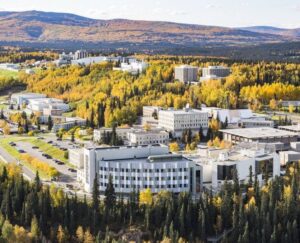
The 2026 AASC Annual Meeting will take place in Fairbanks, Alaska this year. The official meeting dates are June 24-26. The meeting will be held at the University of Alaska Fairbanks (UAF), in the lower campus area at the Wood Center. An icebreaker event will take place on Tuesday evening, June 23, at the Wood Center Pub. Registration will also open that day. Food services will be available in the Wood Center, which also features a bowling alley.
Lodging for the meeting has been secured with a room block available at the La Quinta Inn & Suites by Wyndham Fairbanks Airport (4920 Dale Rd., Fairbanks, AK, 99709) in Fairbanks. Guests may also contact the hotel directly at 907-328-6300 and indicate they are with “AASC 2026″ to receive the group rate. A credit card will be required to hold the reservation. Rooms are available at the GSA rate of $254/night (plus tax) from June 21-28. If you plan to attend in person, you are encouraged to book your room soon so that if the room block needs to be extended, there will be availability. June is the peak of tourist season for Fairbanks, so hotel rooms will fill up quickly.
More details will be coming out soon, including a meeting website and a Call for Abstracts. In the meantime, please reach out to Martin Stuefer (mstuefer@alaska.edu) if you have any questions about the meeting.
AASC Member Spotlight
Each month, we plan to spotlight a member of the AASC. Our hope is that this will help us get to know each other a little better, albeit one person at a time, and further build the community that we know and love.
This month’s member spotlight is the newest state climatologist: Lee Ellenburg of Alabama.

Name: Lee Ellenburg
Hometown: Cullman County, Alabama
Title: Alabama State Climatologist
Affiliation: The University of Alabama in Huntsville
Current Residence: Huntsville, Alabama
Time in Current Position: 1 month
Previous Jobs/Career: Associate State Climatologist and Research Engineer
Research Interests: My research focuses on land–water systems, including hydrology, land–atmosphere interactions, evapotranspiration, soil moisture, and streamflow, with particular emphasis on drought and agricultural water use. As State Climatologist, I apply Alabama’s climate and hydroclimate data to support agriculture, ecosystems, disaster preparedness, and resource management—grounding my work in the state’s landscapes and communities so that our science translates into actionable insights that inform real decisions.
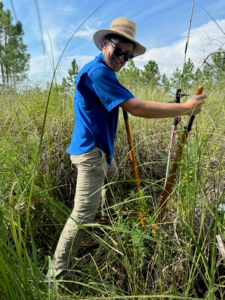
Education: I first attended Wallace State Community College the later received my Bachelors, Masters and PhD in Civil and Environmental Engineering at the University of Alabama in Huntsville.
Hobbies: Gardening, Hiking and DIYing. I love to be outside and love to make things with my hands.
Sports Teams I Root For: First and foremost, Atlanta Braves and when the Braves aren’t in the post season, I root for SEC football (mostly Alabama I guess, unless I’m with my Auburn colleagues then I’m an “SEC” fan…. But I’m still on the fence about Texas and Oklahoma)
Fun Fact(s) About Me: I live on a small quasi-homestead in the middle of the city. I bribe my neighbors with eggs to keep them quiet. I not so secretly loved K-pop Demon Hunters. Though I have never lived anywhere but Alabama ( I live about 50 miles from where I was born), I worked a summer in Yellowstone, have circumnavigated the globe once, and have visited 15 different countries around the world.
Family/Pets: 1 Wife (Marion), 1 Son (Wendell, 11yo), 1 Dog (June Bug), 2 Cats (Pumpkin and Maypop), and 17 chickens.
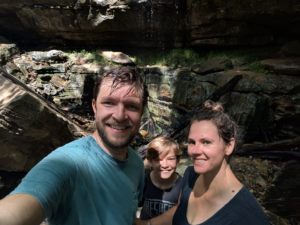
My Most Memorable Weather Event: I have to pick two, the coolest one and the most impressionable: First, the Thundersnow of January 2011 in Huntsville. We ended up measuring close to 10 inches, the city shut down for days, but what I remember most was standing outside at 2 am ( yeah… I stayed up to watch it start) and snow was coming down so heavy and thick and you could hear the thunder reverberate across the city, it was awesome. It was also the time I realized a Kayak can be a good sled.
The second, was the major drought of 2007 which was preceded by a late deep freeze in April (April 7, 2007). This event set a record in North Alabama, with temperatures plummeting to the low 20’s. Of course, this was followed by one of the driest years on record with widespread impacts. This drought is responsible for the initiation of serval statewide drought plans in the Southeast. But why I remember is that my dad owned a tree nursery. I saw first-hand the blood sweat and tears that went in to trying to keep things alive. Looking back, it was not abstract climate statistics, they were lived experiences that helped shaped my understanding of risk, resilience, and the importance of timely, trustworthy climate information.
What AASC Means to Me: To me, AASC represents a sense of community and the relationships that make our work meaningful. It’s a beautiful shared resource, and I also deeply appreciate the humor that so many of you bring to it.
Committee Updates
Mesonet Committee
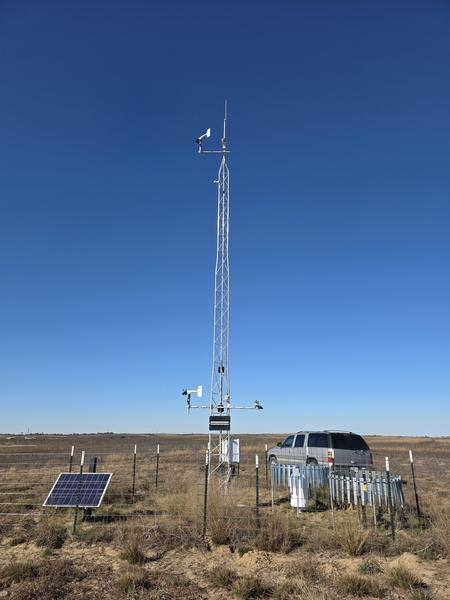
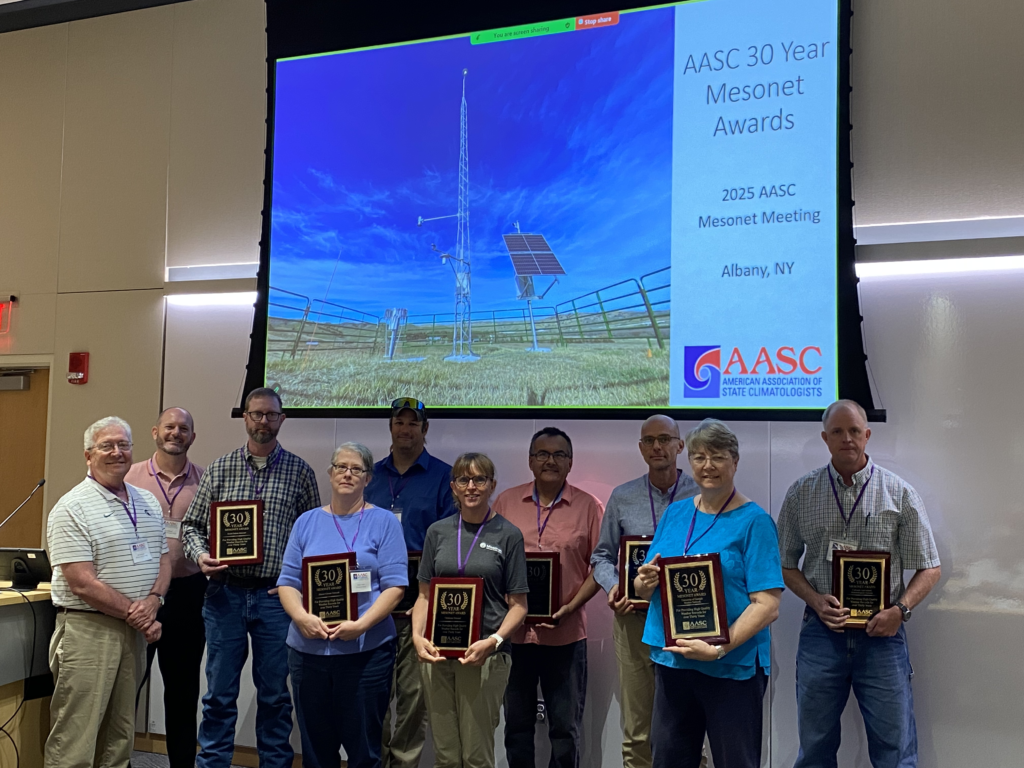
The AASC recognized 12 mesonets at last year’s 2025 AASC Mesonet Community Meeting in Albany, NY for reaching the milestone of 30 years in operation. The reason for marking a mesonet’s efforts at the 30 year mark is probably unsurprising to folks in the AASC and climate community, since having 30 years of high quality meteorological data is generally seen as acceptable for exploring trends in an area’s climate. A major part of the AASC’s mission is to support climate monitoring efforts, and these 30-year mesonets have shown the perseverance and determination to provide high quality data to their states and regions.
Here are the recipients of the 2025 AASC 30 Year Mesonet Awards (Years in Operation):
Nebraska Mesonet (45)
South Dakota Mesonet (43)
Kansas Mesonet (42)
ZiaMet Weather Station Network (41)
Arizona Meteorological Network (39)
Iowa State University Soil Moisture Network (38)
North Dakota Agricultural Weather Network (37)
Illinois Climate Network (37)
University of Georgia Weather Network (35)
Colorado Agricultural Meteorological Network (34)
Missouri Mesonet (34)
Oklahoma Mesonet (32)
Communications Committee
We hope you’re enjoying the new AASC newsletter. As always please send any feedback (good or bad) to the AASC Communications Committee at communications@stateclimate.org!
AASC Website Survey Alert!
Our committee will be undertaking a review and re-visioning of the AASC’s website over the coming year. Part of this process is gathering feedback from the membership via a survey, which we plan to send out later this spring. This effort really needs your input in order to develop a vision that meets the membership’s needs, so please participate in the survey. Results of the survey will be shared at this year’s Annual Meeting in Alaska.
Member News
(Kansas) In a new agreement with the Kansas Water Office, Kansas has invested in the Kansas Mesonet through the state water plan. This investment provides increased multi-year funding to enhance older stations in western Kansas—where water availability and aquifer sustainability are critical—and supports the addition of a full-time regional technician to support network longevity.
(Maryland) In response to the prolonged cold this winter, the Maryland State Climate Office has launched a new seasonal product. The office website now features experimental wind chill maps generated from Mesonet data during NOAA cold-weather warnings and directs users to Chesapeake Bay ice conditions, as analyzed by the U.S. National Ice Center.
(MWRCC) The Midwestern Regional Climate Center plans to hire an undergraduate student intern for summer 2026. Applications are due by 8:00 AM (Eastern) on Monday, March 2, 2026.
(Rhode Island) The Rhode Island State Climate Office recently published new educational webpages on flooding. Included in the new online resources are historical timelines of the major coastal and inland floods that have impacted the state.
(SCIPP/Oklahoma) Southern Climate Impacts Planning Program is leading the upcoming South Central Climate Resilience Forum, to be held April 15–17 in San Antonio, Texas. The forum will convene stakeholders from Kansas, Oklahoma, Texas, Arkansas, and Louisiana to improve understanding of regional climate challenges and highlight ongoing resilience efforts. Early-bird registration is open through February 28.
(Texas) The Texas State Climatologist released a new report evaluating damage estimates recorded in the NOAA National Centers for Environmental Information Storm Events Database. The report identifies inconsistencies in the way damages are estimated and reported—these vary depending on the County Warning Area and the type of weather event. In some cases, damages may not be estimated or reported at all.
(Texas) John Nielsen-Gammon, State Climatologist of Texas, participated in several flood-related presentations and panels at the American Meteorological Society’s Annual Meeting in Houston, Texas, including a panel discussion on how loss of life from such events can be reduced.
(Vermont) Lesley-Ann L. Dupigny-Giroux, Vermont State Climatologist and Professor of Climatology at the University of Vermont, has received the AAAS Mani L. Bhaumik Award for Public Engagement with Science. She is recognized for inspiring people of all ages and backgrounds and for helping communities understand how climatologists, meteorologists, and engineers work together to address climate change. She is a past president of the American Association of State Climatologists (AASC).
(Delaware) The Delaware Climate Office officially released updated climate change projections for Delaware in a report earlier this month. This is the first update of the state’s climate projections in over 10 years. The report includes projections for air temperature, precipitation, sea level rise, and many related parameters.
(NOAA/NWS) NOAA’s Subseasonal to Seasonal (S2S) Analysis, Prediction, and Services virtual seminar series will kick off on February 25th. This series will showcase speakers from the postponed 2025 Joint Climate Diagnostics and Prediction Workshop (CDPW) and Climate Predictions Applications Science Workshop (CPASW). The webinars will include both prediction and services-related topics, including flash drought monitoring and prediction, heat wave prediction and attribution, precipitation prediction, and the use of AI for hydroclimate monitoring and predictability. Unfortunately, the webinars will not be able to recorded.
Topic: Flash Drought Monitoring
Date & Time: Wednesday, February 25th at 2:00 – 3:00pm ET
Presentations:
(1) A Multivariate Flash Drought Climatology for the Contiguous United States based on the Flash Drought Intensity Index (Jason Otkin, University of Wisconsin – Madison)
(2) Near Real-Time Flash Drought Monitoring (Jordan Christian, University of North Dakota)Please register using this Google form.
Have a story you’d like to share about your organization? Please submit your idea to us here.
Trivia!
Who doesn’t enjoy weather and climate trivia? Certainly not the AASC! Lets see if you can solve this month’s trivia questions from the AASC Newsletter’s Trivia Master, Matt Sittel:
- Based on their respective NCEI 1991-2000 normals, one state had all of the top 15 counties that were the most above normal in the US in January, ranging from 11 to 16 degrees above normal! Which state is home to these abnormally warm counties?
- Minnesota
- North Dakota
- Montana
- California
- TRUE or FALSE: the 11.8” of snow that fell in Charlotte, NC established a new record for the most snowfall in January in that city, where records date back to the late 1870s.
- Those of you who attended the AMS meeting in Houston were treated to unseasonably cool air, with temperatures as low as 23° on January 27. What is the all-time record low for Houston, set on January 18, 1930?
- What island nation recorded its first ever freeze on February 3rd of this year, a 32-degree low in the inland municipality of Perico?
- Speaking of the cold, Key West recorded a low of 49° on February 2. How long had it been since Key West last fell below 50°?
- Since 2015
- Since 2010
- Since 1989
- Since 1981
See answers to this month’s trivia questions at the bottom of the newsletter!
Photo of the Month
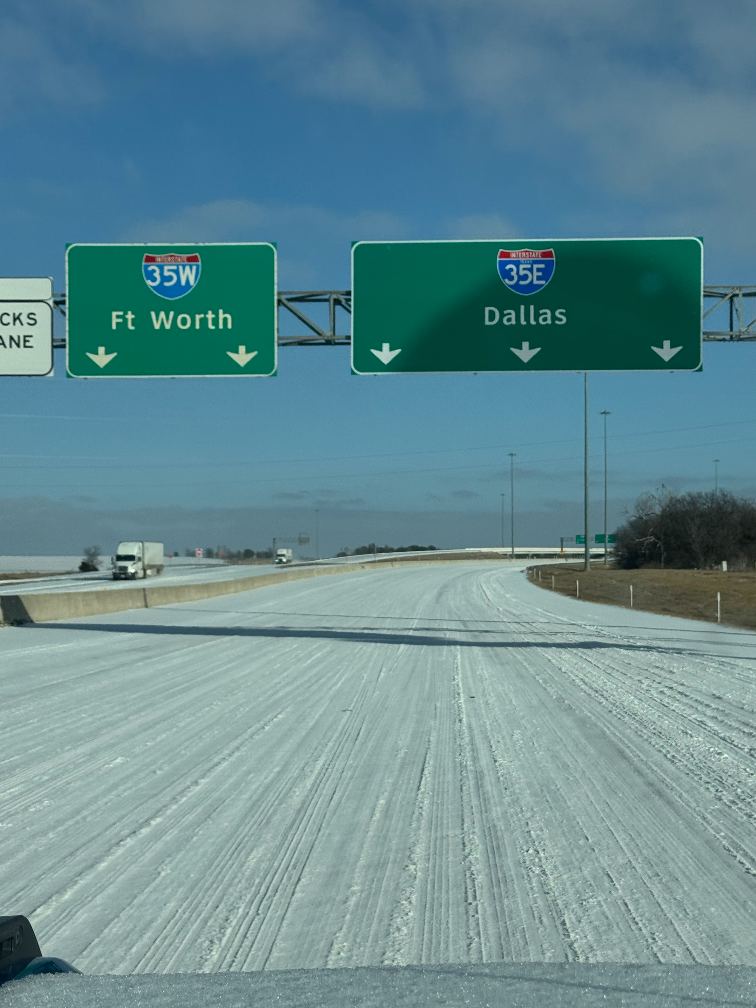
This month’s photo comes from Matt Sittel, Assistant State Climatologist for Kansas. This was taken on January 21 near Hillsboro, Texas on Interstate 35. While I-35 was open, this desolate stretch of highway had experienced sleet and snow overnight, bringing the area to a near standstill. Temperatures were in the upper teens at the time, so melting had yet to commence. Normal high temperatures for the area around Hillsboro is about 57 degrees that time of year. It was quite cold. (Photo Credit: Matt Sittel, Kansas State University)
Contact the AASC
Have a suggestion for the newsletter? Then contact the AASC Communications Committee at communications@stateclimate.org.
For general inquiries about the AASC, contact the AASC Secretary at secretary@stateclimate.org.
Visit the AASC on the web at https://stateclimate.org!
Trivia Question Answers: 1) C | 2) False. 11.8” ranks third behind 13.5” (1893) and 12.1” (1988).|
3) 5°, one of only four occasions when there was a low in the single digits. The other three occurred in 1899. | 4) Cuba | 5) A. The last sub-50 was a low of 49° on February 20, 2015.